
Navigation
Signal patterns and coastal placement reduced wreck risk on narrow routes and uncertain weather passages.
Archive photographs, keeper stories, and a guide to the towers that still stand against wind and tide.
Overview
Across the northern coast, lighthouse stations marked reefs, harbor approaches, and fog-prone channels that shaped regional shipping for more than a century. Their beams, bells, and charts formed a practical safety network long before modern electronic navigation.
Each tower also organized daily life in remote places: keepers maintained lamps, weather logs, and supply routines through isolation and winter exposure. Today, surviving stations stand as preservation landmarks, connecting maritime infrastructure with community memory and local conservation work.
Signal patterns and coastal placement reduced wreck risk on narrow routes and uncertain weather passages.
Keeper households followed strict maintenance routines in exposed stations far from town services.
Restored towers now anchor local heritage efforts, archives, and public access to coastal history.
Source references
Harbor Records
Port ledgers and beacon logs
Family Albums
Household photographs and notes
Preservation Notes
Restoration journals and surveys
Maritime Archives
Navigation circulars and charts
Local Museums
Catalog cards and curator remarks
Timeline · Northern Coast
Four quick phases trace how beacon stations shifted from exposed fire points into preserved landmarks. Read top to bottom on mobile, then follow the stepped path on wider screens.
c. 1790s–1820s
Headlands used coal braziers and timber frames as warning lights. Signals were local, weather-dependent, and often maintained by nearby fishing families.
c. 1830s–1890s
Stone and cast-iron towers standardized coastal signaling. Lens upgrades and fixed maintenance districts turned scattered lights into a coordinated northern route.
c. 1900s–1960s
Daily logs tracked weather, lamp trims, fog alerts, and rescue calls. Families on station became long-term witnesses to maritime change and local memory.
c. 1970s–Today
Automation reduced resident crews, while heritage groups documented structures, restored lantern rooms, and opened surviving towers for guided public access.
Keeper stories
Three close-range vignettes from the northern coast record the routines, solitude, and practical memory that kept lamps burning and families anchored to the headlands.
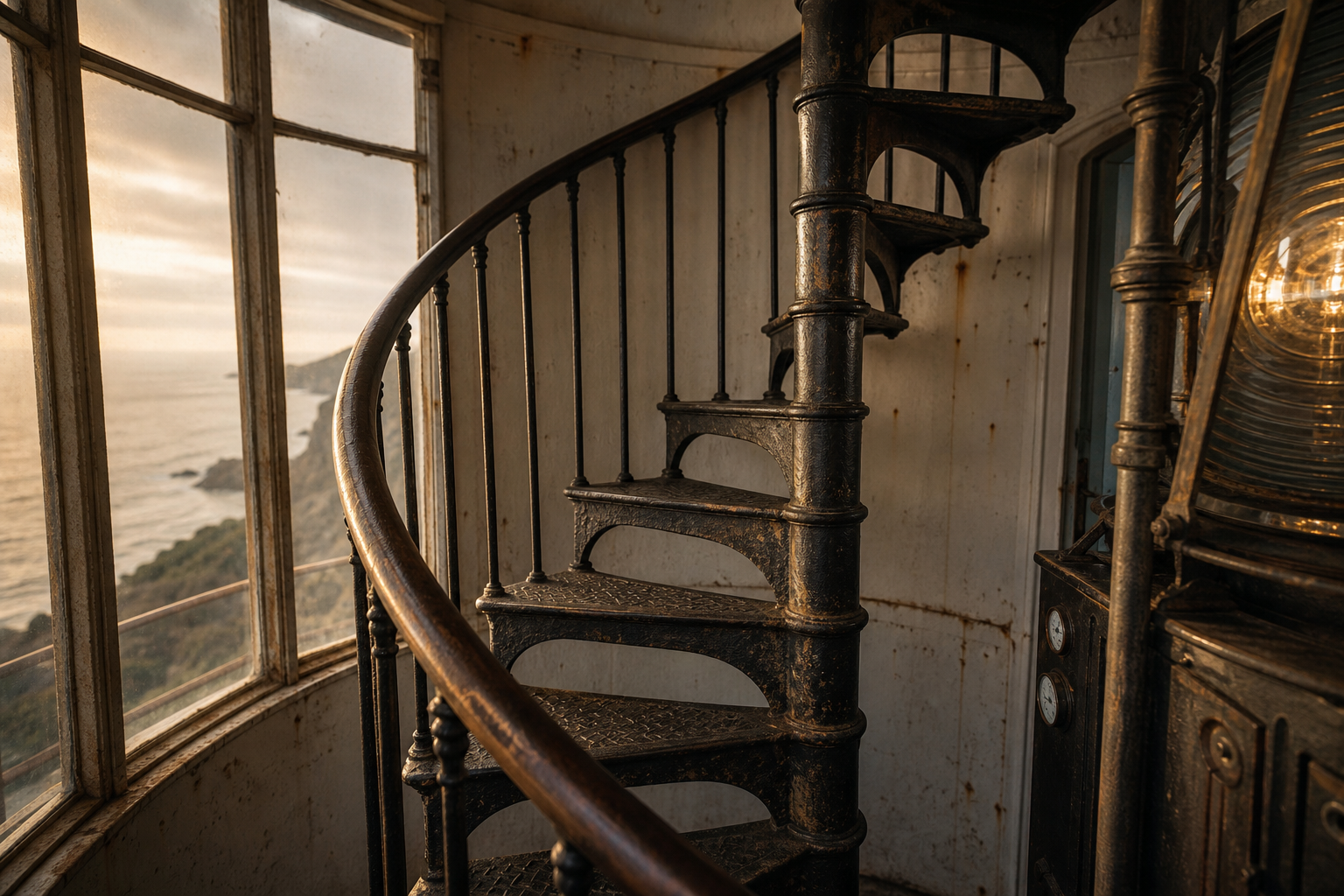
Vignette 01
On fog mornings the assistant keeper climbed the spiral before first light, trimming carbon from the burners and checking glass for salt haze. The stair remembered every shift change in the shine worn into its center rail.
“You learned the weather by the sound of your own boots on the iron.”

Vignette 02
The official log tracked visibility, fuel, and tide times, but the margins carried family shorthand: a child’s fever, a delayed supply boat, a line about gulls circling low before a gale. The record is procedural and personal at once.
“Ink for the signal, pencil for the life between signals.”
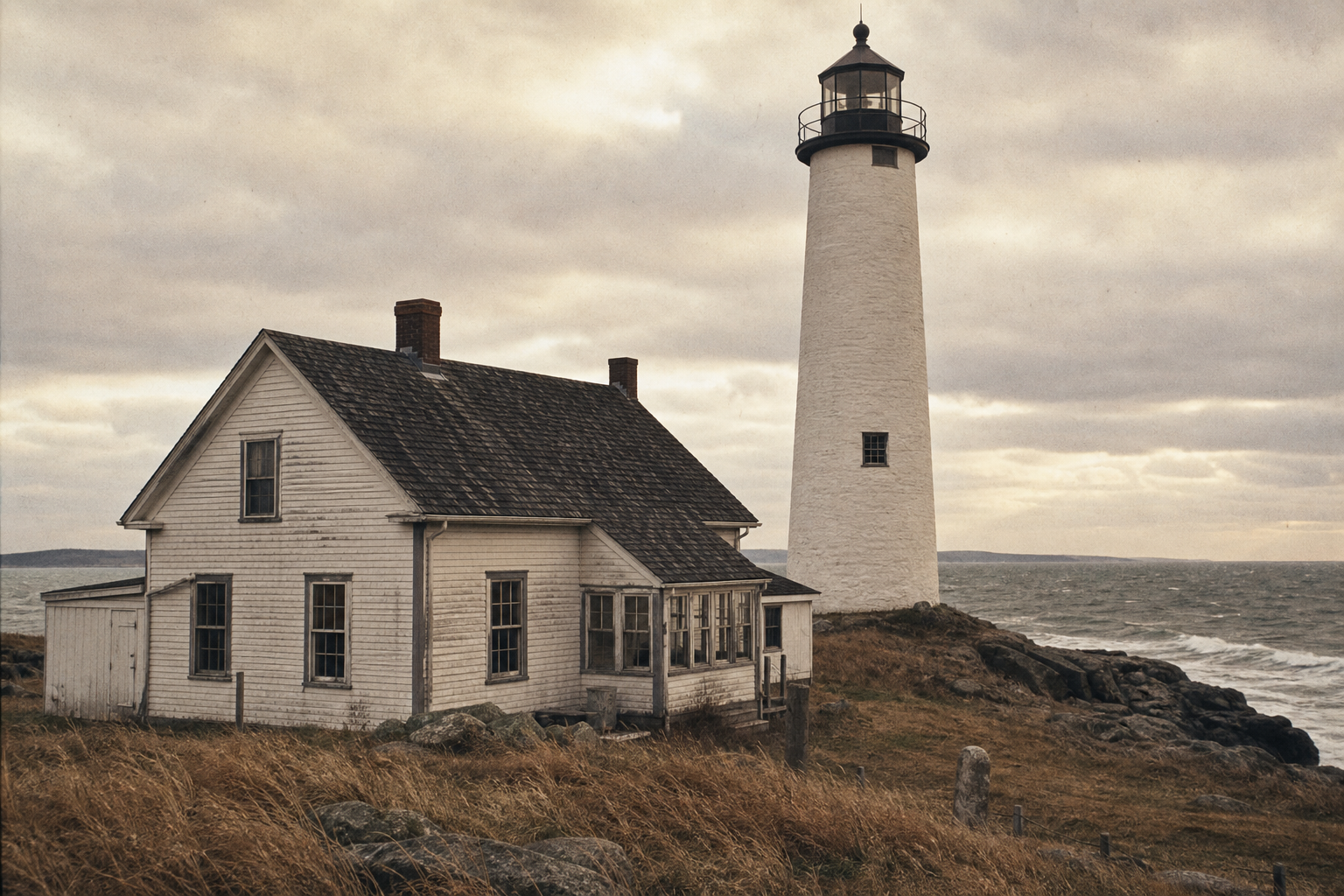
Vignette 03
At the foot of the tower, small dwellings balanced domestic rhythm with station duty: bread cooling near oil tins, wet coats by the stove, and children reading while breakers struck the black rock below.
“Home was measured in lantern checks, meal bells, and the turning sea.”
Reference map
A quick coastal guide to preserved lighthouse sites, linking archival history to places that can still be studied today.
Legend
Visitor notes
Practical guidance gathered from local records, preservation groups, and recent visitor observations.
Access varies: a small number run scheduled tours, many allow only exterior grounds, and some remain closed for safety or conservation work.
Some towers retain stairs, lantern rooms, or service spaces, but others have partial interiors due to weather exposure, wartime alterations, or later rebuilding.
Funding models, ownership, shoreline conditions, and local volunteer capacity differ widely, so each tower follows its own maintenance schedule and conservation priorities.
Outcomes vary: some remain museum annexes, some became private residences, and others survive only as foundations or documented footprints in local archives.
Early morning and late afternoon usually provide softer contrast, clearer tower texture, and fewer crowds; tide and wind can matter as much as season.